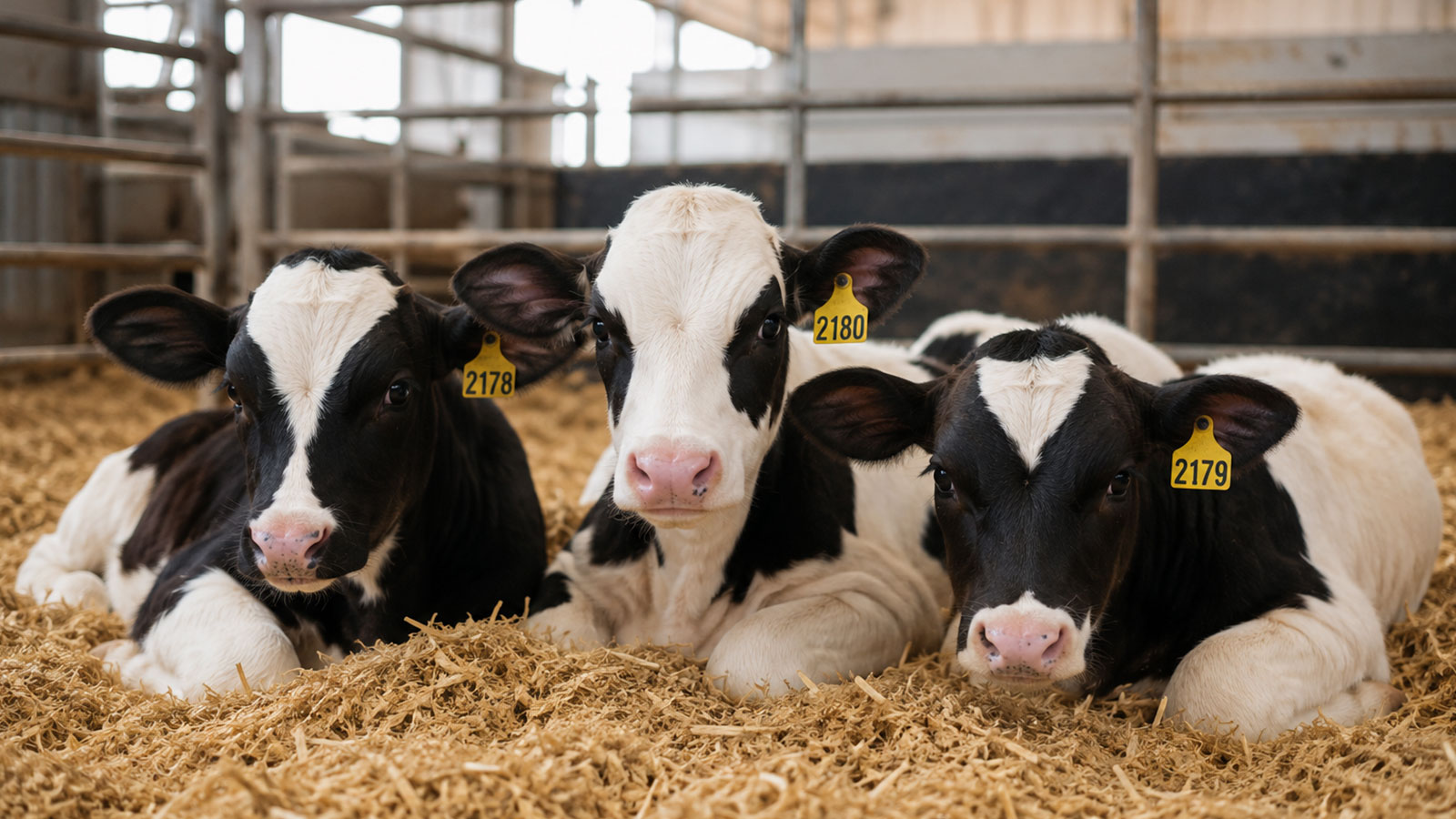

Pre-weaning calf management gets more scrutiny every year, and for good reason — the decisions made in a calf's first few weeks ripple through the rest of her productive life. Two factors that are getting particular attention lately: social housing and transportation stress. Both are variables practices and producers can actually control, yet most operations still don't have a clean, consistent way to track either one.
Why Social Housing Matters
The days of assuming individual housing is automatically the "safe" default are fading. Research increasingly points to social housing — pairing or grouping calves early — as a way to support better feed intake, reduce stress responses, and ease the transition to group housing later on. But social housing also introduces new variables: competition at the feeder, disease transmission risk, and the need for closer observation to catch problems before they spread through a group.
Why Transport Stress Matters
Every calf that's moved — whether from a birthing area to a nursery, or between facilities — carries some degree of transport stress with it. That stress shows up downstream: suppressed immune response, reduced weight gain, higher susceptibility to respiratory disease. The challenge isn't knowing transport matters; it's connecting "this calf was moved on this day, under these conditions" to what happens to her health record two or three weeks later.
The Practical Gap
Here's where most practices get stuck: the knowledge exists, but the tracking doesn't. Which calves came from a stressful transport? Which are in social vs. individual housing? When a calf shows signs of respiratory illness three weeks later, is anyone connecting that back to how she arrived? In most practices, the answer is "not systematically" — the information lives in someone's memory or a paper notebook, not in a record that follows the calf.
This is exactly the kind of gap VetLogix's calf management tools were built to close. Mobile-first intake logging means a tech or producer can flag housing type and transport conditions the moment a calf arrives — right from a phone, chute-side. That flag doesn't disappear into a notebook; it stays attached to the calf's record, so if she shows symptoms later, whoever's treating her can see the full picture instantly, without playing memory games.
A simple example: a calf arrives after a longer-than-usual transport. She's flagged at intake. Two weeks later, she spikes a fever. Instead of starting from scratch, the treating vet sees the transport flag immediately — informing both the diagnosis and the conversation with the producer about what might need to change for the next batch for calves handled similarly.
Catch This Live at AABP 2026
If this is a topic you're already thinking about, you're in good company — Dr. Whitney Knauer is presenting on exactly this subject at AABP 2026: "Hot topics in pre-weaning calf management: social housing and transportation" (Thursday, Aug 27, CONRAD C).
We'll be at Booth #528 all through the tradeshow (Thu 8am–6:30pm, Fri 8am–4:30pm) — stop by afterward and we'll show you how VetLogix turns this kind of data into something your whole team can actually act on.