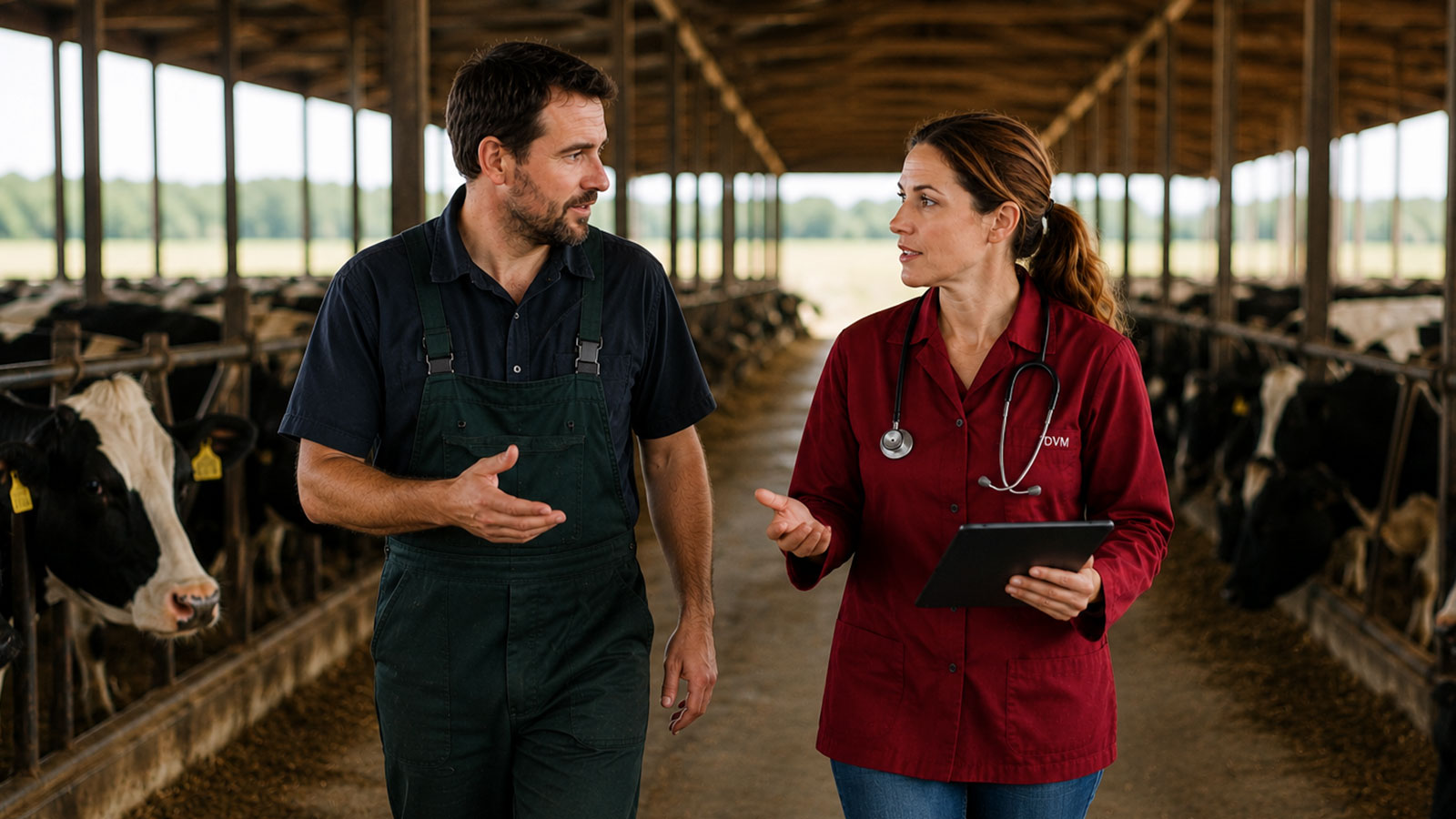

Bovine veterinary medicine has always been built around treatment. Diagnose the issue, recommend the protocol, deliver care, and move to the next farm. But modern producers increasingly expect more from their veterinary partners than clinical expertise alone.
Today’s dairy and beef operations are under pressure from every direction — labor shortages, tighter margins, regulatory oversight, rising operational costs, and growing demands around documentation and consistency. As farms become larger and more systemized, producers are looking for veterinary relationships that support the broader operation, not just individual treatment decisions. And that changes expectations.
Clinical skill is still essential. Producers absolutely value strong medicine and sound judgment. But in many operations, the differentiator is no longer simply whether a veterinarian can diagnose and treat effectively. It’s whether the overall experience surrounding that care is consistent, efficient, and operationally reliable.
Can farm staff clearly follow treatment instructions? Are protocols consistent between veterinarians? Are records easy to access later? Is communication organized? Does billing accurately reflect the work being done?
As herd sizes grow and multiple clinicians become involved across the same operation, inconsistency becomes increasingly noticeable — and producers notice it quickly.
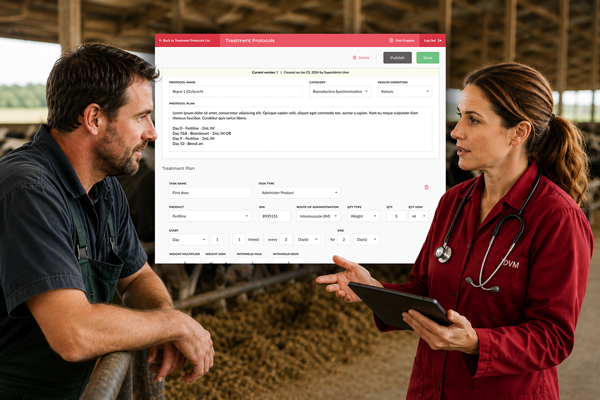
Many veterinary practices deliver excellent care but still rely on fragmented workflows behind the scenes: handwritten notes, delayed documentation, inconsistent protocols, disconnected billing processes, or systems that weren’t designed for the realities of field-based bovine practice. Over time, those small inefficiencies create friction for both the veterinary team and the producer.
The result is operational uncertainty. Different veterinarians may approach cases differently. Documentation may vary from visit to visit. Producers may struggle to track follow-up actions or treatment history consistently across the herd. None of these issues feel dramatic in isolation, but together they influence how producers evaluate the reliability of the veterinary relationship overall.
Modern producers increasingly view veterinarians as operational partners, not just treatment providers. That means consistency matters. Clear protocols improve confidence among farm staff. Reliable documentation reduces uncertainty. Organized workflows help producers manage herd health more effectively over time.
This becomes especially important in multi-veterinarian practices where continuity of care depends heavily on workflow alignment and accessible information. When systems are inconsistent, producers feel it. When systems are reliable, producers trust it.
VetLogix’s role
VetLogix was designed around the realities of bovine veterinary practice — helping practices bring treatment workflows, herd records, protocols, billing, scheduling, and inventory management together within one connected system. The goal is not to replace clinical expertise, but to support that expertise with workflows that improve consistency, visibility, and operational reliability across the practice.
Because modern producers aren’t only evaluating treatment outcomes anymore. They’re evaluating the overall experience surrounding care. And increasingly, the practices that stand out are the ones that make consistency feel effortless.
Want to see how VetLogix supports more consistent bovine workflows and producer communication?