
Every bovine veterinary practice eventually faces the same reality:
New veterinarians enter the field.
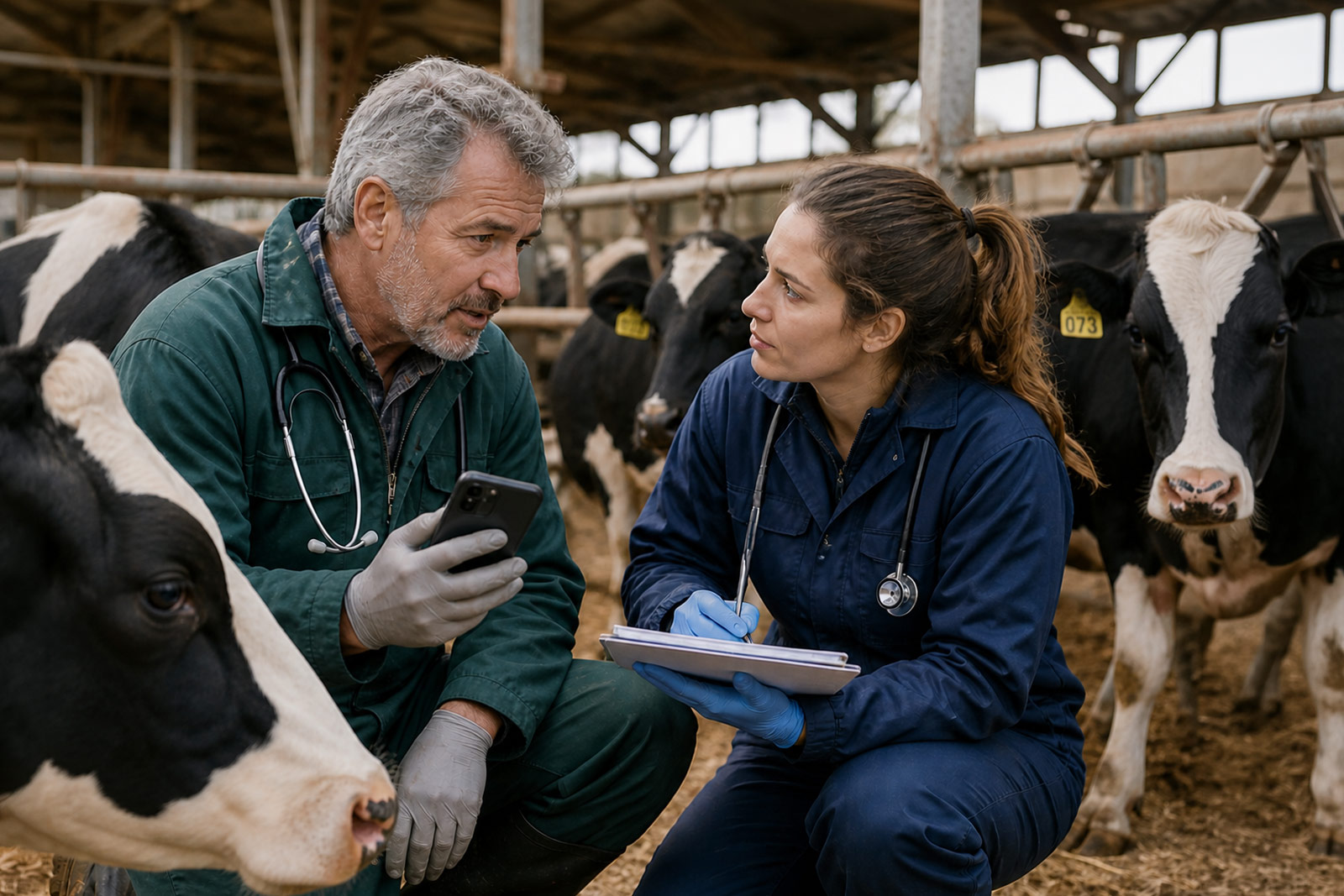
Whether recent graduates or clinicians transitioning into large animal medicine, onboarding new associates introduces one of the most underestimated challenges in veterinary practice — not clinical knowledge, but operational variability.
Because bovine medicine is rarely learned in controlled environments.
It is learned in barns, trucks, and field conditions where decisions are fast, workflows are fluid, and experience develops over time.
Knowledge vs confidence
New veterinarians arrive well trained. They understand physiology, pathology, pharmacology, and diagnostic reasoning. But early-career clinicians often encounter a different type of challenge:
Confidence in real-world decision-making.
Which treatment pathway should be used here?
What is this farm’s preferred protocol?
How does this practice handle similar cases?
Which drug selection framework applies?
Clinical uncertainty rarely stems from lack of knowledge.
It stems from variability.
The hidden burden of inconsistency
In practices without clearly structured systems, new clinicians must navigate:
- Differing treatment preferences
- Informal workflows
- Memory-based protocols
- Variable documentation expectations
- Unwritten practice norms
Every decision carries additional cognitive load.
Instead of focusing purely on patient care, clinicians must also interpret how care should be delivered within the practice.
Why systems accelerate development
Structured systems reduce uncertainty by stabilizing decision environments.
Protocols clarify treatment pathways.
Standardized workflows reduce ambiguity.
Consistent documentation expectations build confidence.
Accessible records improve continuity.
Systems act as clinical scaffolding.
They do not replace judgment — they support it.
Protocols as training tools
Treatment protocols are often framed purely as consistency mechanisms. But they also function as powerful educational tools.
Protocols provide:
- Clear clinical baselines
- Repeatable decision logic
- Reduced cognitive friction
- Predictable treatment frameworks
New clinicians gain confidence faster when variability is reduced.
Reducing cognitive overload
Early-career veterinarians operate under intense cognitive demand. They are building pattern recognition, adapting to field environments, and refining decision-making speed.
Systems that introduce friction amplify stress.
Systems that reduce friction stabilize learning.
The scalability challenge
As practices grow, onboarding complexity increases. Multi-clinician coordination, treatment consistency, recordkeeping accuracy, and billing workflows must remain stable even as new associates join.
Informal systems struggle to scale.
Structured systems enable growth.
VetLogix’s role
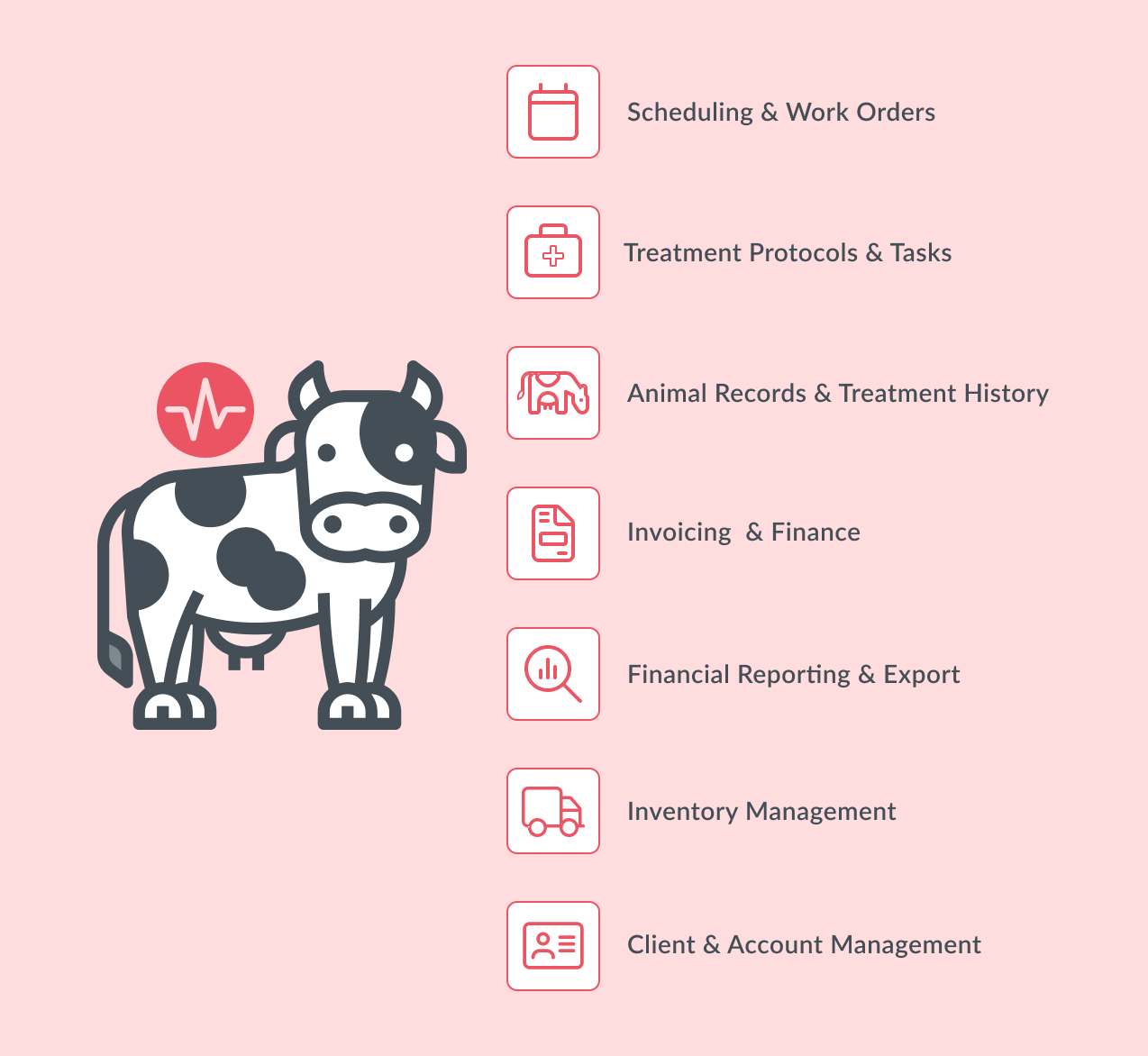
VetLogix supports onboarding and clinician development by embedding protocols, treatments, records, billing, and workflows into a unified system designed specifically for bovine practice.
Treatment guidance becomes accessible rather than assumed. Documentation patterns remain consistent. Workflow expectations are clarified. Variability naturally decreases.
New veterinarians spend less time interpreting how the practice works.
And more time developing how they work.
Because confidence is not built through knowledge alone.
It is built through consistency.
And systems are what make consistency sustainable.
Help your team learn faster, work smarter, and stay consistent in the field.
Schedule a demo today!