

Bovine veterinary medicine has always relied on clinical expertise, experience, and sound judgment. But as herd sizes grow and production systems become more complex, another factor has become just as critical to successful practice:
Consistency.
Herd protocols — once viewed primarily as internal reference tools — now sit at the center of clinical quality, operational efficiency, and client trust.

The scale of modern bovine practice
Today’s dairy and beef operations are larger, faster-moving, and more systematized than ever before. A single farm visit may involve multiple animals, overlapping conditions, preventative programs, and herd-level decision-making. Many veterinary practices operate with multiple clinicians serving the same farms, sometimes across different days or even the same day.
In this environment, variability naturally increases.
Different veterinarians may approach the same condition differently. Farm staff may receive slightly varied treatment instructions. Drug selection patterns may shift between visits. Recordkeeping practices may vary. Individually, these differences seem minor. Over time, they compound into noticeable inconsistencies.
Variation itself is not inherently problematic. Veterinary medicine requires flexibility. But unmanaged variation introduces risk.

The operational cost of inconsistency
Without standardized treatment frameworks, practices frequently encounter friction:
Conflicting treatment recommendations can confuse producers and farm staff. Drug selection may vary unnecessarily. Documentation patterns may differ between clinicians. Follow-up decisions may lack continuity.
For producers, inconsistency erodes confidence. For practices, variability complicates training, compliance, communication, and billing accuracy.
Protocols function as stabilizers rather than restrictions.
Protocols as quality anchors
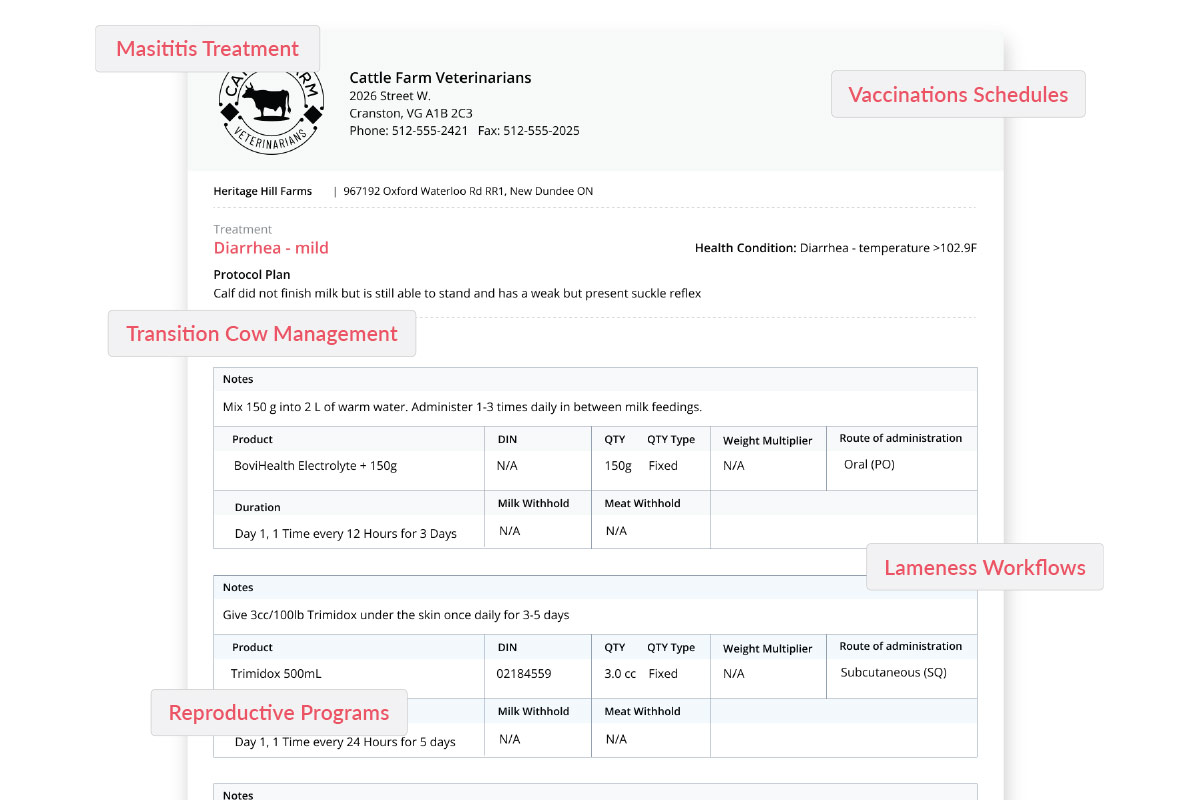
Well-designed herd protocols establish repeatable frameworks for common clinical scenarios:
- Mastitis treatment pathways
- Vaccination schedules
- Transition cow management
- Lameness workflows
- Reproductive programs
Protocols do not replace clinical judgment. Instead, they create shared baselines that reduce unnecessary variation while preserving professional discretion.
They make consistency scalable across clinicians, farms, and visits.
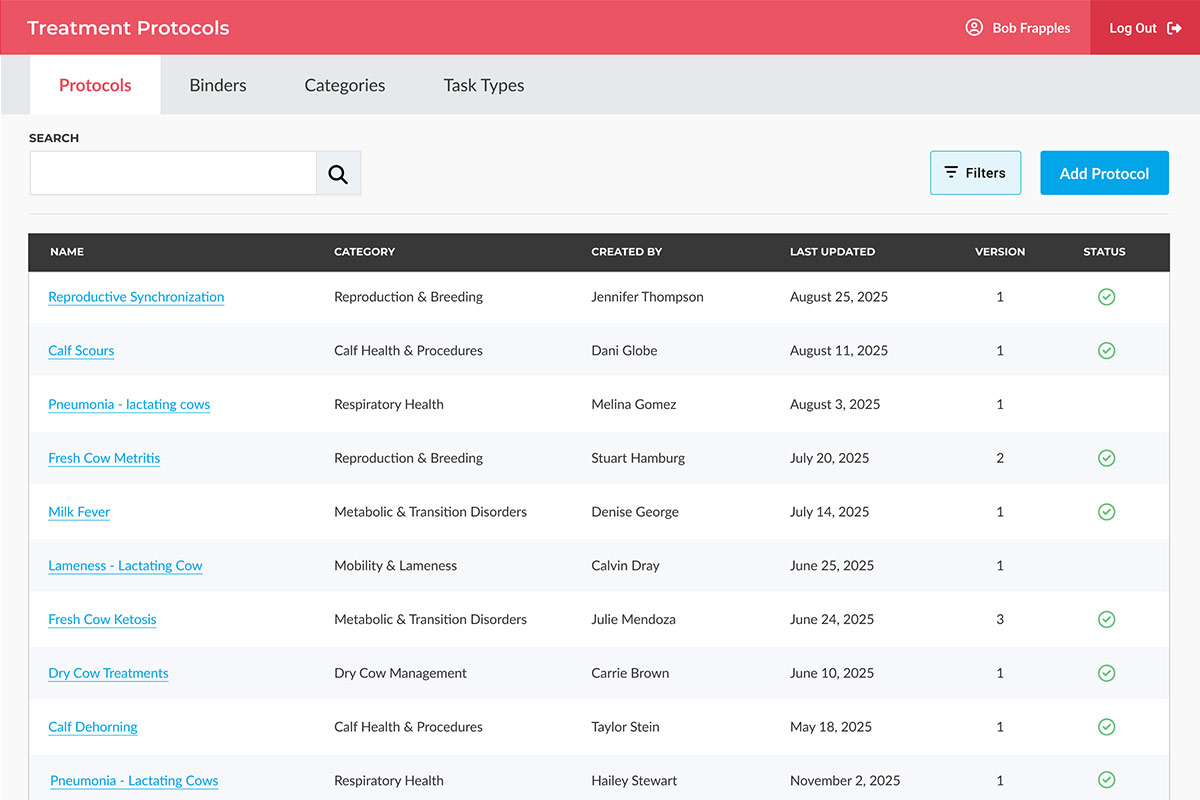
Why protocols matter more today
Modern bovine practice operates under increasing pressure:
Herd sizes continue to expand. Regulatory oversight continues to tighten. Antibiotic stewardship expectations continue to grow. Multi-clinician coordination is increasingly common. Documentation accuracy is no longer optional.
Consistency is no longer simply a clinical preference.
It is a business necessity.
Practices that maintain reliable protocols operate with fewer errors, smoother workflows, clearer communication, and stronger client relationships.
VetLogix’s role
Protocols only work when they are practical to follow.
When treatment guidance lives in binders or static documents, adherence declines. Access becomes inconsistent. Updates become difficult. Variation inevitably returns.
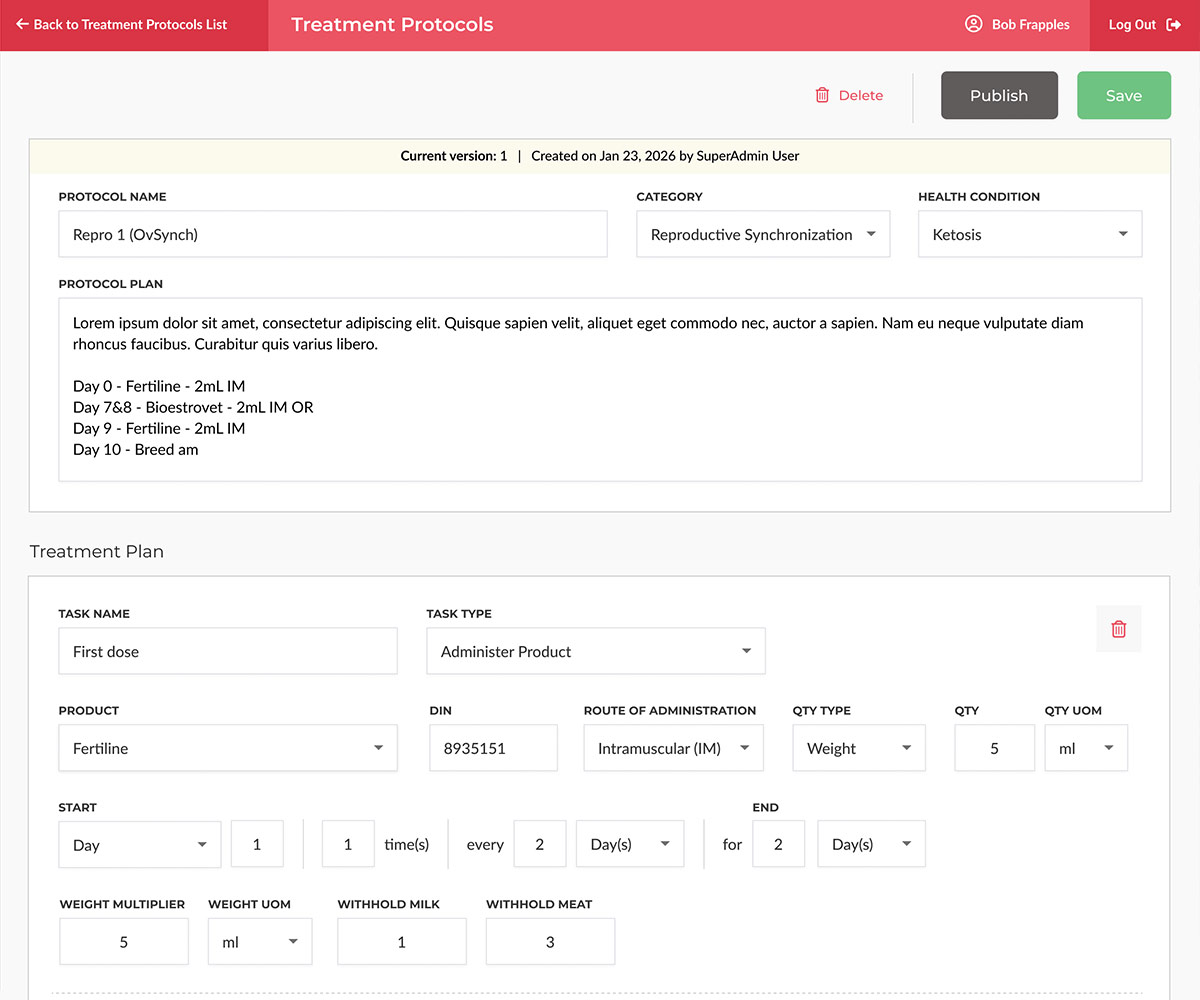
VetLogix embeds herd protocols directly into workflow — aligning treatments, records, billing, and inventory within a system designed specifically for field-based bovine medicine.
Because consistency is not built on intention alone.
It is built on systems that make consistency effortless.
Turn your protocols into repeatable, trackable workflows that protect margins, improve compliance, and reduce variation in the field.